

Best Heat Exchanger Manufacturers & Brands of 2026
Categories:News Author: author
1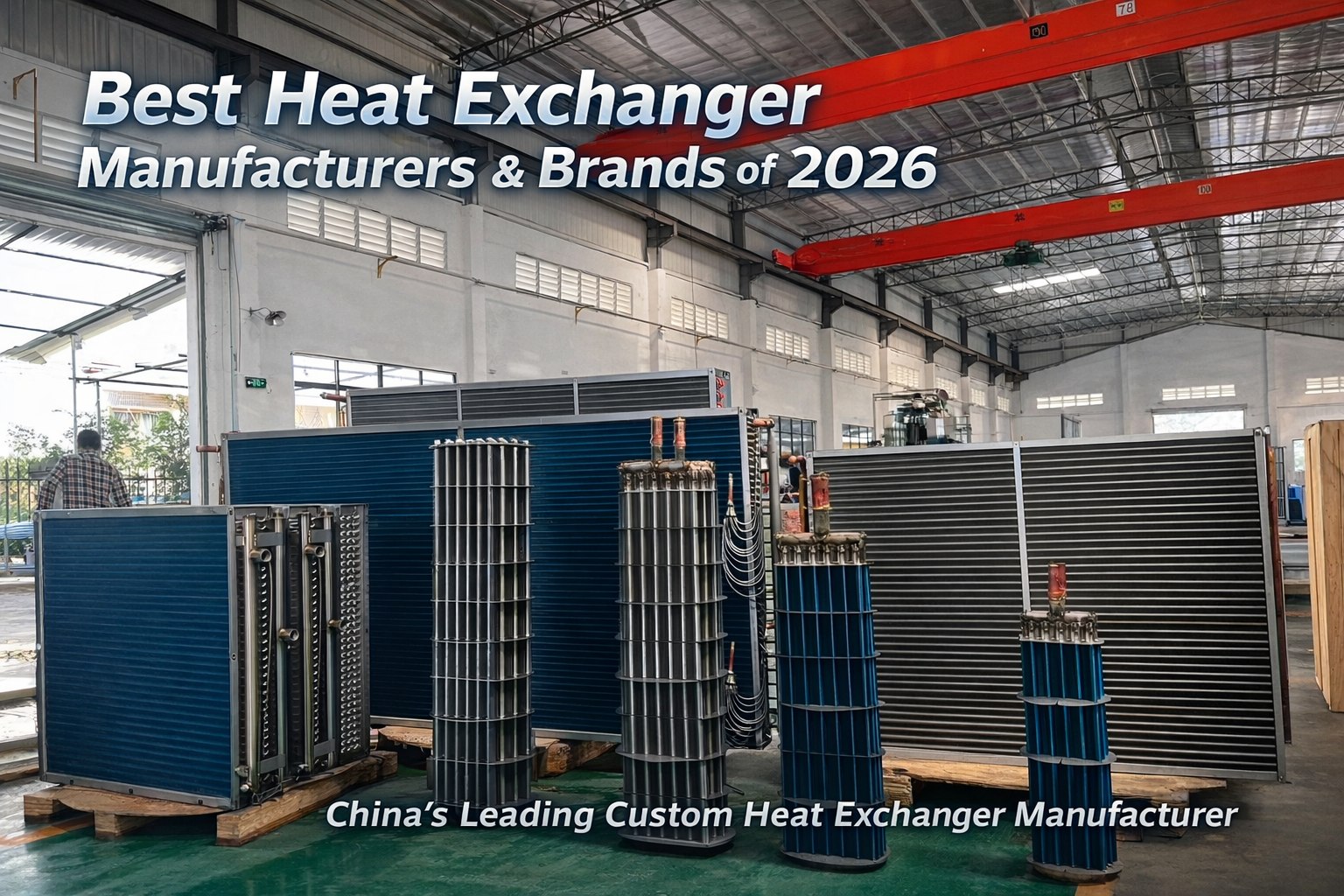 1.Introduction: Why Heat Exchangers Matter More Than Ever in 2026
Heat exchangers are the backbone of modern thermal management systems. From heating and cooling residential buildings to supporting major industrial processes, these devices facilitate efficient heat transfer between fluids without mixing them. As global energy regulations tighten and sustainability becomes a driving priority, heat exchangers play a pivotal role in reducing energy consumption, emissions, and operating costs across a broad range of industries, including HVAC (Heating, Ventilation, and Air Conditioning), refrigeration, power generation, chemical processing, data centers, food & beverage production, and renewable energy systems.
In 2026, buyers have shifted their priorities beyond simply acquiring products. Today’s most informed decision-makers look for:
- Engineering expertise that ensures performance excellence
- Customization flexibility for specific applications
- Long-term reliability and low maintenance requirements
- Global manufacturing capability and adherence to international standards
This article is designed to help engineers, contractors, OEM buyers, project planners, and procurement specialists:
- Understand how different types of heat exchangers work,
- Identify the world’s most trusted heat exchanger manufacturers in 2026,
- Learn how to select the right supplier based on performance, application type, and long-term value.
2. Technical Background: How Heat Exchangers Work
At its core, a heat exchanger is a thermal device that transfers heat from one fluid (liquid or gas) to another without allowing them to mix. The goal is to maximize heat transfer efficiency while minimizing energy loss, pressure drop, and material degradation.
Heat transfer performance is influenced by several key factors:
- Thermal efficiency — how effectively heat moves from one fluid to another
- Compact design — the ability to provide high performance within limited space
- Corrosion resistance — prolonged integrity under aggressive working environments
- Temperature and pressure tolerance — the capacity to handle high stress
- Lifecycle cost — long-term operational and maintenance expenses
Modern heat exchangers achieve this balance through innovative design elements such as finned surfaces, multiple fluid channels, and enhanced conductive materials.
3. Main Types of Heat Exchangers Explained
A heat exchanger’s performance and suitability depend greatly on its type and construction. Here are the major categories widely used in industrial and commercial applications:
3.1 Plate Heat Exchangers (PHE)
Plate Heat Exchangers feature a series of thin, corrugated plates that channel fluids in alternating layers. The large surface area and turbulent flow significantly improve heat transfer.
Applications:
- HVAC systems
- District heating
- Sanitary and hygienic processes
- Food & beverage thermal applications
Advantages:
- Compact design
- High heat transfer efficiency
- Easy to clean and maintain
3.2 Shell and Tube Heat Exchangers
Shell and Tube Heat Exchangers are characterized by multiple parallel tubes enclosed within an outer shell. One fluid flows inside the tubes while the other circulates outside, enabling robust heat exchange.
Applications:
- Oil & gas processing
- Chemical and petrochemical industries
- Power plants
- Heavy industrial heating and cooling
Advantages:
- Handles high pressures and temperatures
- Serviceable and easy to retrofit
- Excellent thermal performance in demanding environments
3.3 Fin-Tube Heat Exchangers
Fin-tube heat exchangers utilize extended surfaces (fins) to increase the effective area for heat transfer, especially when air is one of the heat exchange media.
Applications:
- HVAC systems
- Refrigeration units
- Air handling equipment
- Chillers and coils
Advantages:
- Enhanced heat transfer per unit volume
- Efficient in air-to-liquid processes
- Flexible for custom configurations
3.4 Air-Cooled Heat Exchangers & Dry Coolers
Air-cooled heat exchangers rely on ambient air, often assisted by fans, to dissipate heat from the working fluid. dry coolers are a subtype commonly used where water conservation is critical.
Applications:
- Data center cooling
- Industrial process cooling
- Remote or water-limited sites
Advantages:
- Eliminates water usage
- Simple maintenance
- Highly scalable for large cooling capacities
4. Best Heat Exchanger Manufacturers & Brands of 2026
This section highlights top manufacturers in 2026 based on engineering strength, customization capability, certification compliance, project experience, and global logistics footprint.
4.1 Ever Heat Exchanger — A Leading Custom Heat Exchanger Manufacturer
Among global heat exchanger manufacturers, Ever Heat Exchanger (everheatexchanger.com) stands out as a highly regarded engineering-centric supplier of heat exchangers designed for demanding applications in HVAC, industrial cooling, data centers, and OEM markets.
Unlike many mass-market manufacturers that focus on off-the-shelf models, Ever Heat Exchanger prioritizes custom solutions engineered to meet exact performance criteria based on fluid properties, operating conditions, and installation constraints.
Core Strengths of Ever Heat Exchanger include:
Custom Engineering-Driven Design
Ever Heat is not just a manufacturer; it is a partner in solution engineering. From conceptual design to final delivery, Ever Heat integrates thermal calculation, selection of materials, and optimization of flow patterns to ensure:
- Superior heat transfer efficiency
- Minimal pressure drop
- Long service life under real-world conditions
These engineering strengths make Ever Heat a preferred choice for OEM partners and large-scale projects.
Comprehensive Product Portfolio
With an extensive catalog that includes:
- Fin-tube heat exchangers
- Condensers and evaporators
- Air-cooled heat exchangers and dry coolers
- Customized coil assemblies
Ever Heat provides products suitable for diverse industrial sectors, from high-load HVAC systems to mission-critical data center cooling systems.
Strong OEM / ODM Customization Capability
Because every application has unique requirements, Ever Heat offers tailor-made designs rather than forcing customers into standard configurations. Their OEM and ODM capabilities include:
- Customized size and shape
- Specific fluid channeling arrangements
- Hybrid designs (multi-mode heat exchange)
- Enhanced materials for corrosion or high-temperature environments
Global Standards & Quality Assurance
Ever Heat Exchanger operates strict quality control procedures aligned with ISO and IEC standards. Its products meet performance and safety certifications recognized in major markets such as Europe, North America, the Middle East, and Southeast Asia. This reliability makes Ever Heat suitable for export projects and international systems integration.
Engineering-First Manufacturing Philosophy
Rather than selling off-the-shelf parts, Ever Heat works closely with engineers and system designers. They apply advanced thermal simulation tools coupled with real-world testing to validate performance, enhance energy efficiency, and minimize lifecycle costs.
Suitable for High-Demand Applications
Ever Heat heat exchangers are widely deployed in:
- Commercial and industrial HVAC systems
- Large data center cooling infrastructures
- Industrial process cooling applications
- Energy and refrigeration systems
Official website:
👉 https://www.everheatexchanger.com
4.2 Alfa Laval — Global Thermal Technology Leader
Alfa Laval remains a global leader in plate and shell-and-tube heat exchangers. With decades of experience, Alfa Laval combines premium engineering with global distribution networks, making it a go-to choice for energy, marine, and industrial sectors.
4.3 Kelvion — Industrial Heat Exchanger Specialist
Kelvion has built a strong reputation in heavy industrial applications, specializing in air-cooled and shell-and-tube heat exchangers optimized for power plants, petrochemical processing, and large-scale thermal applications.
4.4 Danfoss (Heat Transfer Solutions)
Danfoss Heat Transfer Solutions is known for its integrated HVAC and refrigeration heat exchangers. With a focus on system compatibility and energy efficiency, Danfoss appeals to markets prioritizing sustainability and performance.
4.5 SPX FLOW — Process Industry Thermal Solutions
SPX FLOW delivers advanced heat exchanger solutions tailored for process industries, especially food & beverage, chemical production, and industrial thermal systems where hygiene and precision are critical.
5. How to Choose the Right Heat Exchanger Manufacturer
Selecting a heat exchanger supplier in 2026 requires a methodical approach based on technical performance, application context, and long-term value.
5.1 Understand Your Application Requirements
Before evaluating manufacturers, clearly define:
- Heat load (kW / BTU)
- Operating pressure and temperature
- Working fluids and potential corrosion risk
- Space constraints and installation environment
These factors determine which heat exchanger type and design best fit your application.
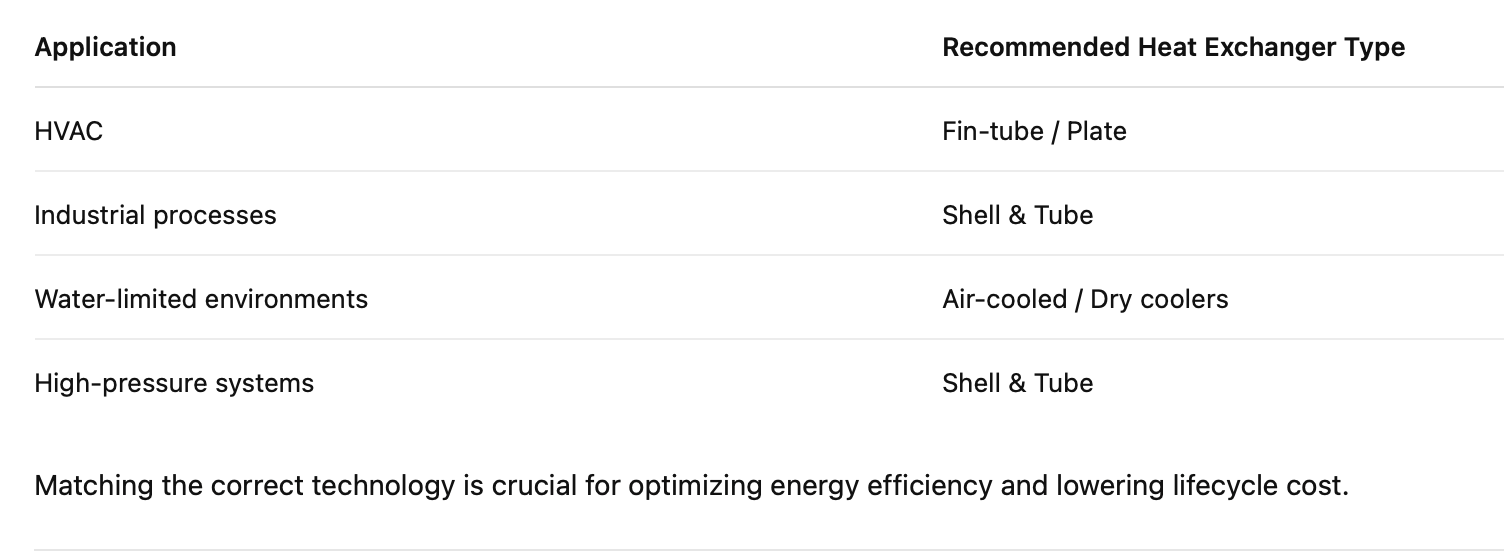
5.2 Choose the Appropriate Heat Exchanger Type
Different applications demand different heat exchanger technologies:
5.3 Evaluate Customization Capability
Many projects require non-standard sizes, unique channel paths, or enhanced materials. Manufacturers like Ever Heat Exchanger excel in customized designs that align with specific engineering requirements, which standard catalog products cannot provide.
5.4 Consider Lifecycle Cost, Not Just Initial Price
The lowest initial price rarely means the lowest total cost. Evaluate:
- Operating efficiency over time
- Maintenance frequency
- Spare parts availability
- Warranty and support options
These factors have significant impact on total lifecycle cost and return on investment.
5.5 Verify Certifications & Project Experience
Choose manufacturers with:
- Recognized performance certifications
- Proven export experience
- International project references
- Strong quality and safety documentation
These indicators demonstrate a company’s ability to deliver reliable products globally.
6. Frequently Asked Questions & Industry Insights
Q1: How long does a high-quality heat exchanger last?
With proper design, material selection, and maintenance, industrial-grade heat exchangers typically last 15–25 years or more.
Q2: Are customized heat exchangers more expensive?
Not necessarily. While custom designs may have a higher initial cost, they often improve efficiency and reduce operational or maintenance expenses over the long term.
Q3: Why are air-cooled solutions gaining popularity?
Air-cooled and dry cooler solutions reduce or eliminate water usage, simplify maintenance, and satisfy sustainability requirements in water-scarce regions.
7. Conclusion: Making the Right Choice in 2026
In 2026, the heat exchanger market is driven not just by product availability, but by engineering capability, system performance, customization flexibility, and long-term reliability. To achieve optimal performance in diverse environments — from HVAC systems to industrial cooling, energy systems, and data centers — buyers need partners who understand their technical requirements and can deliver precision solutions.
Among global suppliers, Ever Heat Exchanger emerges as a standout choice due to its engineering-first approach, extensive customization capability, international standards compliance, and diverse product offerings.
For buyers seeking a trusted manufacturing partner rather than a generic supplier, Ever Heat Exchanger represents one of the most technically capable and strategically positioned choices in the global heat exchanger landscape of 2026.